Trail Running/Walking
The Trail Running/Walking targets the Quadriceps and suits beginner-level lifters. With 2 distinct steps, proper form is straightforward to learn and execute.
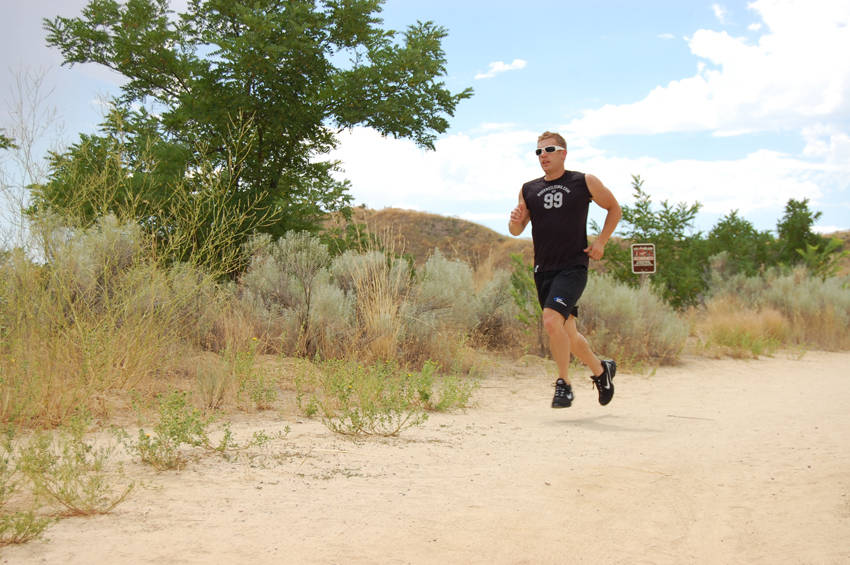
Starting position
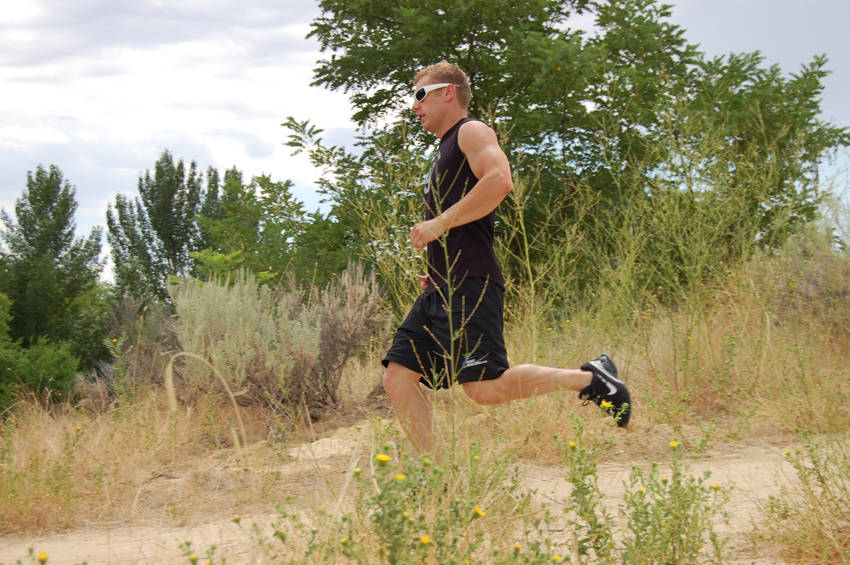
Ending position
Muscles Worked
The quadriceps handles the primary load during this movement. The calves and glutes and hamstrings assist as stabilizers throughout the range of motion.
How to Trail Running/Walking
- 1
Running or hiking on trails will get the blood pumping and heart beating almost immediately. Make sure you have good shoes. While you use the muscles in your calves and buttocks to pull yourself up a hill, the knees, joints and ankles absorb the bulk of the pounding coming back down. Take smaller steps as you walk downhill, keep your knees bent to reduce the impact and slow down to avoid falling.
- 2
A 150 lb person can burn over 200 calories for 30 minutes walking uphill, compared to 175 on a flat surface. If running the trail, a 150 lb person can burn well over 500 calories in 30 minutes.
Common Mistakes
- • Focus on the mind-muscle connection — feel the target muscle working through each rep.
- • Use a controlled tempo of 2 seconds up, 2 seconds down to eliminate momentum.
Similar Exercises
Frequently Asked Questions
What muscles does the Trail Running/Walking work?
The Trail Running/Walking primarily works the Quadriceps. Secondary muscles include the Calves, Glutes, Hamstrings, which assist during the movement.
Is the Trail Running/Walking good for beginners?
Yes, the Trail Running/Walking is suitable for beginners. Start with light weight to master the 2-step form before adding load.
What equipment do I need for the Trail Running/Walking?
The Trail Running/Walking requires minimal equipment and can be performed in most gym settings.
Track Your Progress
RepStack logs every set, calculates your e1RM, and coaches progressive overload — automatically.