Split Squat with Dumbbells
The Split Squat with Dumbbells is a beginner compound movement that activates 3 muscle groups simultaneously. It primarily targets the Quadriceps, making it one of the more efficient exercises in RepStack's 873-exercise database.
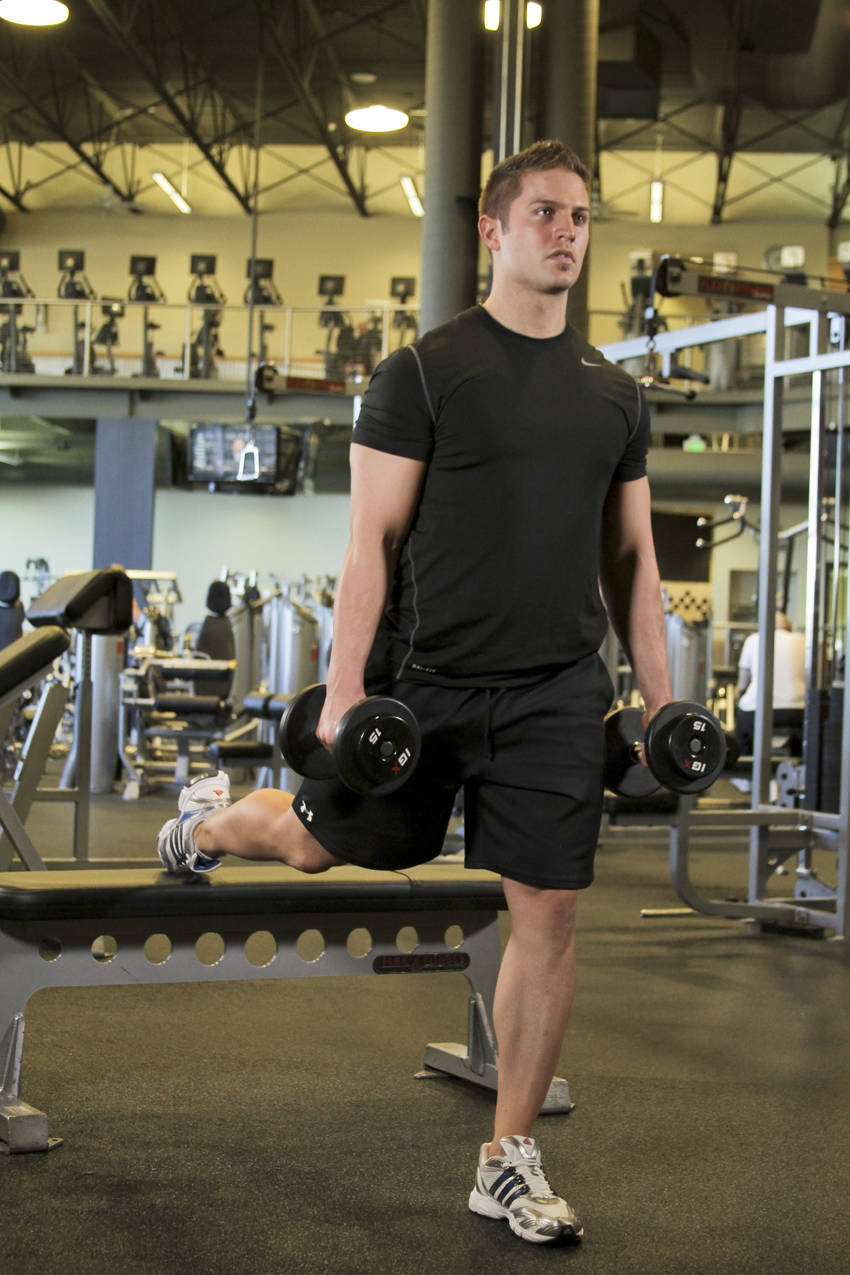
Starting position
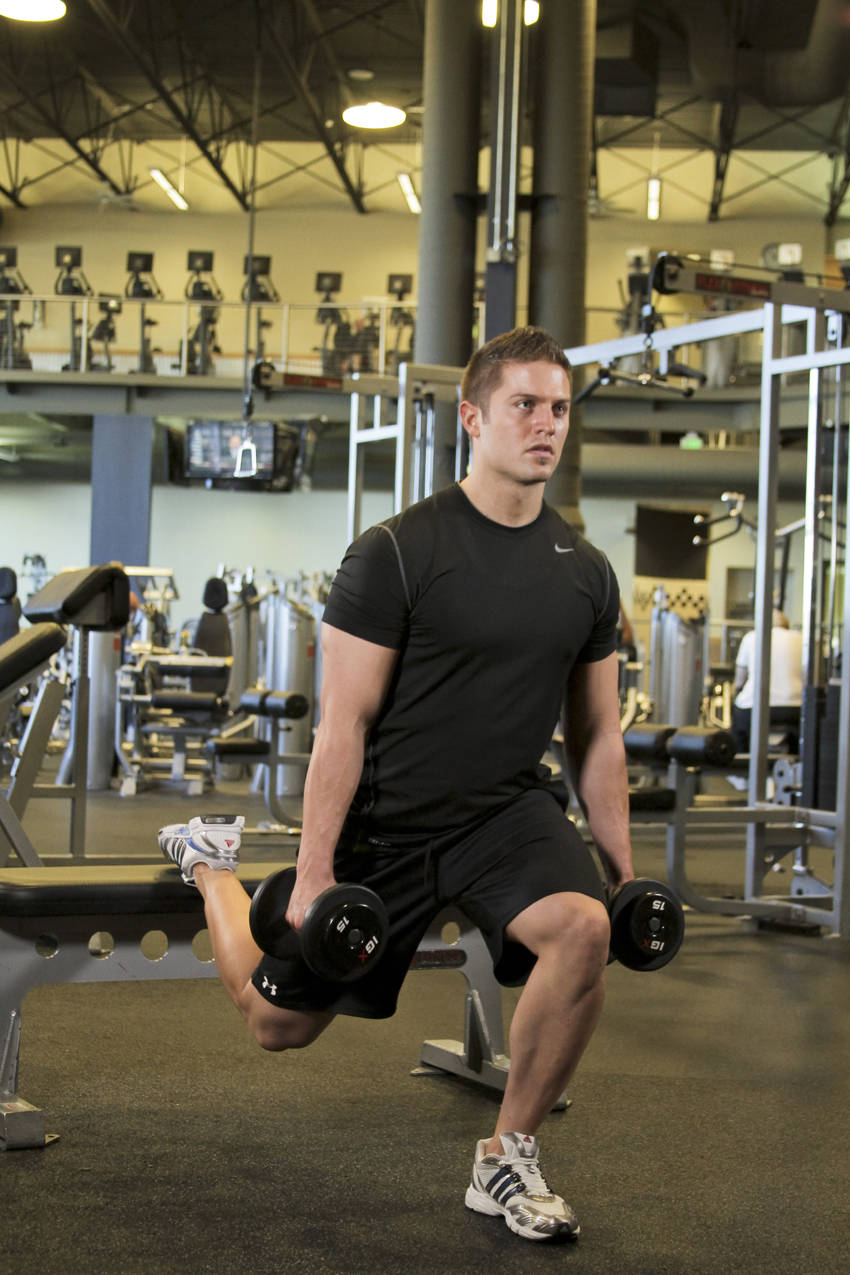
Ending position
Muscles Worked
The quadriceps handles the primary load during this movement. The glutes and hamstrings assist as stabilizers throughout the range of motion.
How to Split Squat with Dumbbells
- 1
Position yourself into a staggered stance with the rear foot elevated and front foot forward.
- 2
Hold a dumbbell in each hand, letting them hang at the sides. This will be your starting position.
- 3
Begin by descending, flexing your knee and hip to lower your body down. Maintain good posture througout the movement. Keep the front knee in line with the foot as you perform the exercise.
- 4
At the bottom of the movement, drive through the heel to extend the knee and hip to return to the starting position.
Common Mistakes
- • Brace your core before initiating the movement — maintain tension throughout the entire range of motion.
- • Control the eccentric (lowering) phase for at least 2 seconds to maximize muscle fiber recruitment.
- • Start with your weaker side first — match the reps on your stronger side to prevent imbalances.
- • Avoid locking out aggressively at the top — stop just short of full extension to keep tension on the muscle.
Similar Exercises
Frequently Asked Questions
What muscles does the Split Squat with Dumbbells work?
The Split Squat with Dumbbells primarily works the Quadriceps. Secondary muscles include the Glutes, Hamstrings, which assist during the movement.
Is the Split Squat with Dumbbells good for beginners?
Yes, the Split Squat with Dumbbells is suitable for beginners. Start with light weight to master the 4-step form before adding load.
What equipment do I need for the Split Squat with Dumbbells?
You need dumbbell to perform the Split Squat with Dumbbells. Most commercial gyms will have this available.
Track your estimated one-rep max over time. Use our 1RM calculator to see where you stand, or let RepStack compute it automatically after every set.
Track Your Progress
RepStack logs every set, calculates your e1RM, and coaches progressive overload — automatically.