Rope Jumping
The Rope Jumping targets the Quadriceps and suits intermediate-level lifters. With 2 distinct steps, proper form is straightforward to learn and execute.
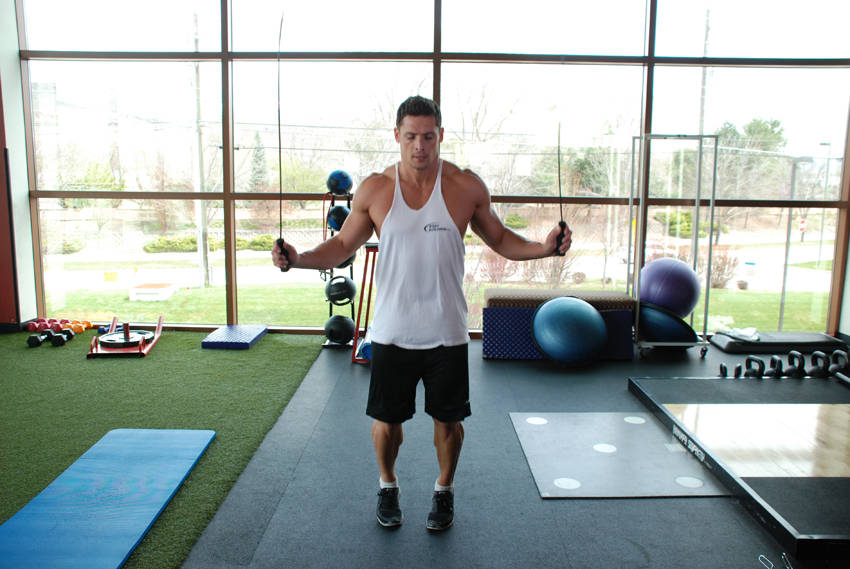
Starting position
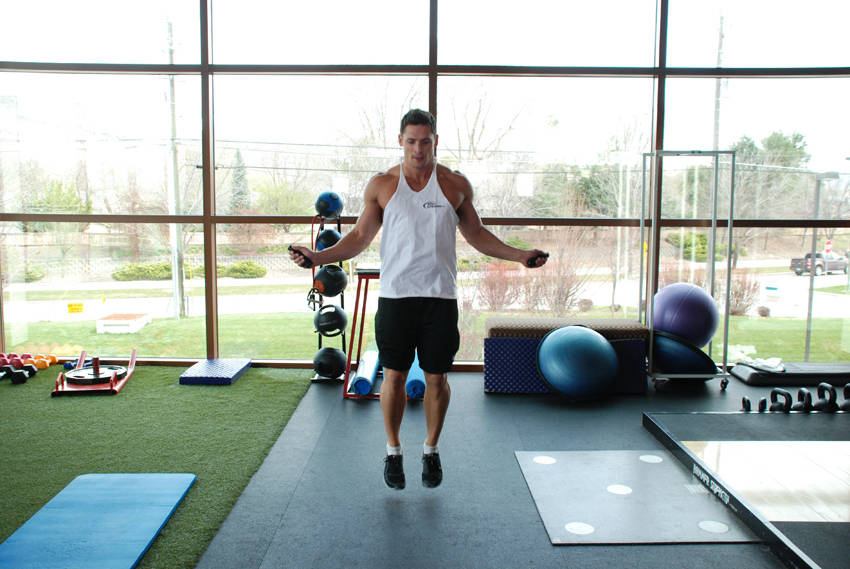
Ending position
Muscles Worked
The quadriceps handles the primary load during this movement. The calves and hamstrings assist as stabilizers throughout the range of motion.
How to Rope Jumping
- 1
Hold an end of the rope in each hand. Position the rope behind you on the ground. Raise your arms up and turn the rope over your head bringing it down in front of you. When it reaches the ground, jump over it. Find a good turning pace that can be maintained. Different speeds and techniques can be used to introduce variation.
- 2
Rope jumping is exciting, challenges your coordination, and requires a lot of energy. A 150 lb person will burn about 350 calories jumping rope for 30 minutes, compared to over 450 calories running.
Common Mistakes
- • Focus on the mind-muscle connection — feel the target muscle working through each rep.
- • Use a controlled tempo of 2 seconds up, 2 seconds down to eliminate momentum.
Similar Exercises
Frequently Asked Questions
What muscles does the Rope Jumping work?
The Rope Jumping primarily works the Quadriceps. Secondary muscles include the Calves, Hamstrings, which assist during the movement.
Is the Rope Jumping good for beginners?
The Rope Jumping is rated intermediate. Beginners should build foundational strength with simpler movements first, then progress to this exercise once comfortable with the movement pattern.
What equipment do I need for the Rope Jumping?
You need other to perform the Rope Jumping. Most commercial gyms will have this available.
Track Your Progress
RepStack logs every set, calculates your e1RM, and coaches progressive overload — automatically.