Lying Glute
The Lying Glute targets the Glutes and suits expert-level lifters. With 4 distinct steps, proper form is straightforward to learn and execute.
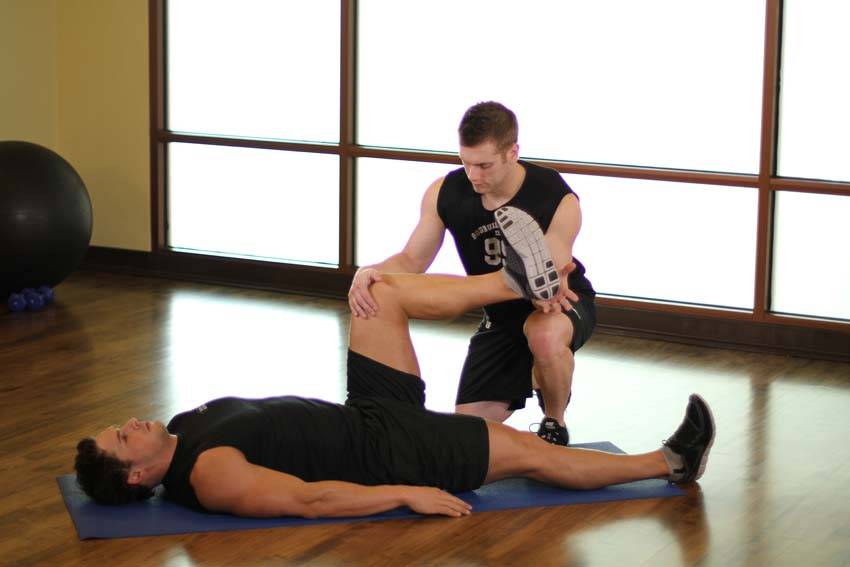
Starting position
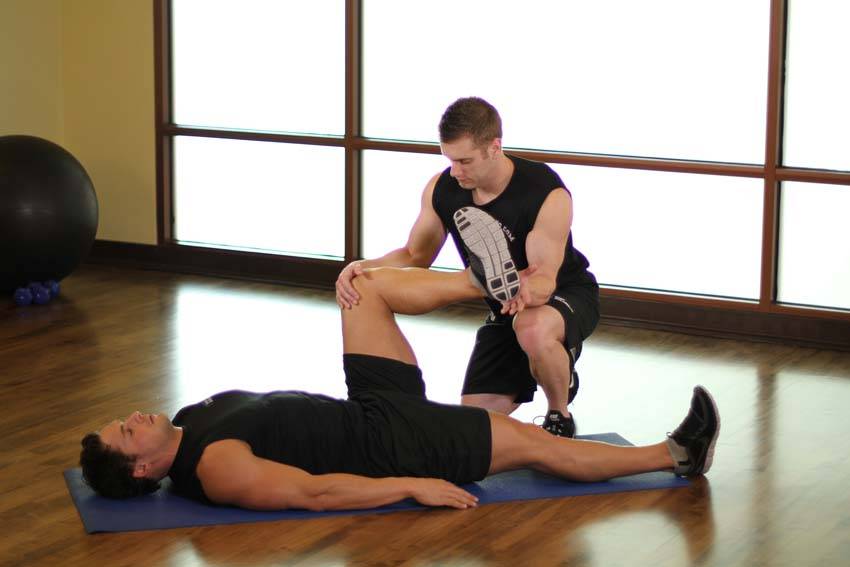
Ending position
Muscles Worked
The glutes handles the primary load during this movement. The abductors assist as stabilizers throughout the range of motion.
How to Lying Glute
- 1
Lie on your back with your partner kneeling beside you.
- 2
Flex the hip of one leg, raising it off of the floor. Rotate the leg so the foot is over the opposite hip, the lower leg perpendicular to your body. Your partner should hold the knee and ankle in place. This will be your starting position.
- 3
Attempt to push your leg towards your partner, who should be preventing any actual movement of the leg.
- 4
After 10-20 seconds, completely relax as your partner gently pushes the ankle and knee towards your chest. Be sure to inform your helper when the stretch is adequate to prevent injury or overstretching.
Common Mistakes
- • Focus on the mind-muscle connection — feel the target muscle working through each rep.
- • Use a controlled tempo of 2 seconds up, 2 seconds down to eliminate momentum.
- • If reps become too easy, slow the tempo or add a pause at the hardest point rather than rushing through more reps.
Similar Exercises
Frequently Asked Questions
What muscles does the Lying Glute work?
The Lying Glute primarily works the Glutes. Secondary muscles include the Abductors, which assist during the movement.
Is the Lying Glute good for beginners?
The Lying Glute is an advanced exercise. It requires solid baseline strength and good movement control. Work through beginner and intermediate variations before attempting this one.
What equipment do I need for the Lying Glute?
You need no equipment — just your bodyweight to perform the Lying Glute. This makes it ideal for home workouts.
Track Your Progress
RepStack logs every set, calculates your e1RM, and coaches progressive overload — automatically.