External Rotation with Cable
The External Rotation with Cable isolates the Shoulders through a controlled range of motion. This beginner-level cable exercise builds focused strength where compound movements often fall short.
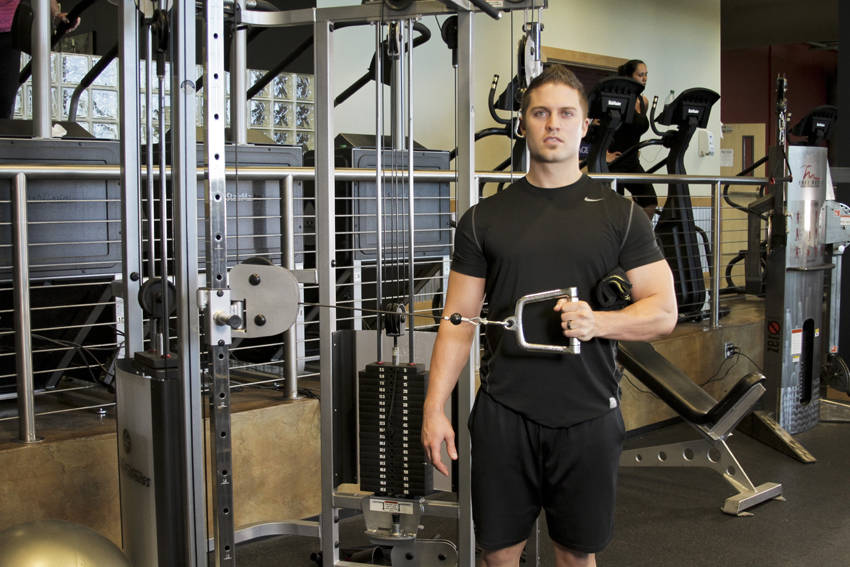
Starting position
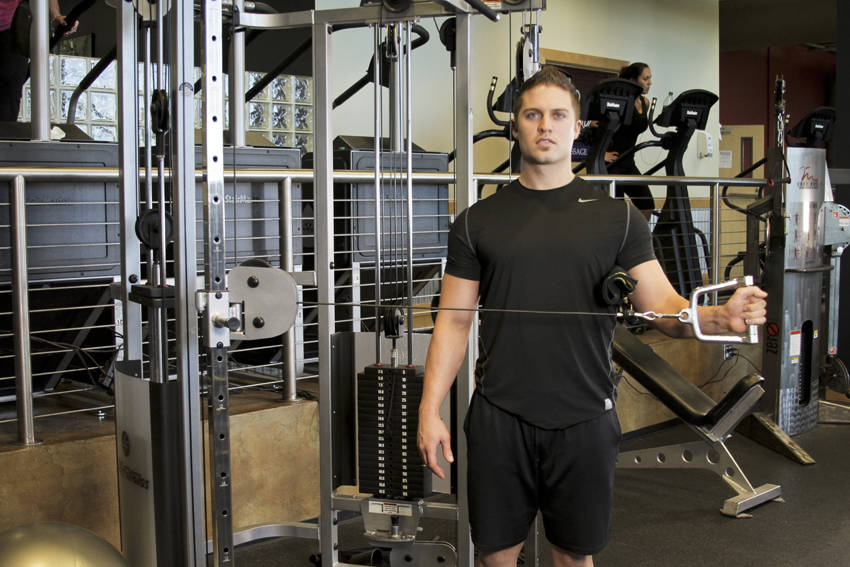
Ending position
Muscles Worked
The shoulders handles the primary load during this movement. This isolation movement keeps tension concentrated on a single muscle group.
How to External Rotation with Cable
- 1
Adjust the cable to the same height as your elbow. Stand with your left side to the band a couple of feet away.
- 2
Grasp the handle with your right hand, and keep your elbow pressed firmly to your side. We recommend you hold a pad or foam roll in place with your elbow to keep it firmly in position.
- 3
With your upper arm in position, your elbow should be flexed to 90 degrees with your hand reaching across the front of your torso. This will be your starting position.
- 4
Execute the movement by rotating your arm in a backhand motion, keeping your elbow in place.
Common Mistakes
- • Focus on the mind-muscle connection — feel the target muscle working through each rep.
- • Use a controlled tempo of 2 seconds up, 2 seconds down to eliminate momentum.
- • Stand far enough from the pulley to maintain constant tension at every point in the range of motion.
- • Squeeze at peak contraction for a full second — this is where most of the growth stimulus occurs.
Similar Exercises
Frequently Asked Questions
What muscles does the External Rotation with Cable work?
The External Rotation with Cable primarily targets the Shoulders. It's an effective isolation exercise for building shoulders strength.
Is the External Rotation with Cable good for beginners?
Yes, the External Rotation with Cable is suitable for beginners. Start with light weight to master the 4-step form before adding load.
What equipment do I need for the External Rotation with Cable?
You need cable to perform the External Rotation with Cable. Most commercial gyms will have this available.
Track Your Progress
RepStack logs every set, calculates your e1RM, and coaches progressive overload — automatically.