Dumbbell Scaption
The Dumbbell Scaption isolates the Shoulders through a controlled range of motion. This beginner-level dumbbell exercise builds focused strength where compound movements often fall short.
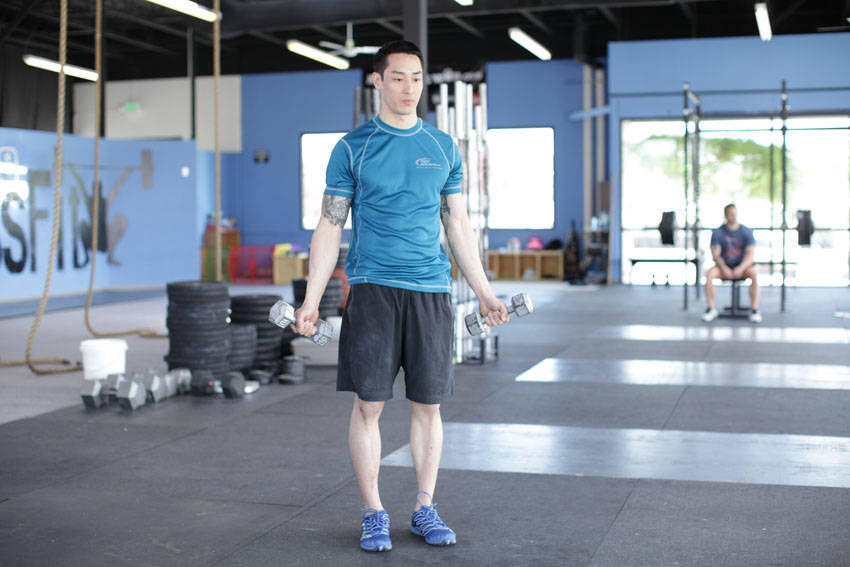
Starting position
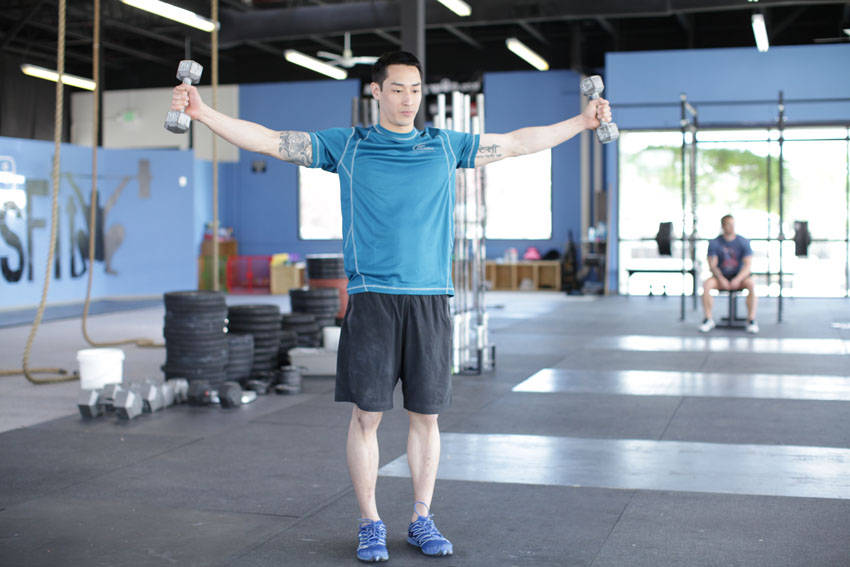
Ending position
Muscles Worked
The shoulders handles the primary load during this movement. The traps assist as stabilizers throughout the range of motion.
How to Dumbbell Scaption
- 1
This corrective exercise strengthens the muscles that stabilize your shoulder blade. Hold a light weight in each hand, hanging at your sides. Your thumbs should pointing up.
- 2
Begin the movement raising your arms out in front of you, about 30 degrees off center. Your arms should be fully extended as you perform the movement.
- 3
Continue until your arms are parallel to the ground, and then return to the starting position.
Common Mistakes
- • Focus on the mind-muscle connection — feel the target muscle working through each rep.
- • Use a controlled tempo of 2 seconds up, 2 seconds down to eliminate momentum.
- • Start with your weaker side first — match the reps on your stronger side to prevent imbalances.
- • Avoid locking out aggressively at the top — stop just short of full extension to keep tension on the muscle.
Similar Exercises
Frequently Asked Questions
What muscles does the Dumbbell Scaption work?
The Dumbbell Scaption primarily works the Shoulders. Secondary muscles include the Traps, which assist during the movement.
Is the Dumbbell Scaption good for beginners?
Yes, the Dumbbell Scaption is suitable for beginners. Start with light weight to master the 3-step form before adding load.
What equipment do I need for the Dumbbell Scaption?
You need dumbbell to perform the Dumbbell Scaption. Most commercial gyms will have this available.
Track Your Progress
RepStack logs every set, calculates your e1RM, and coaches progressive overload — automatically.