Bodyweight Flyes
The Bodyweight Flyes isolates the Chest through a controlled range of motion. This intermediate-level e-z curl bar exercise builds focused strength where compound movements often fall short.
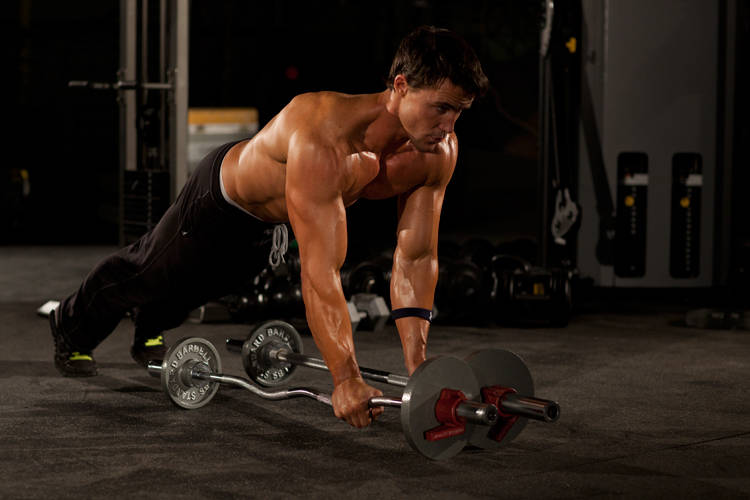
Starting position
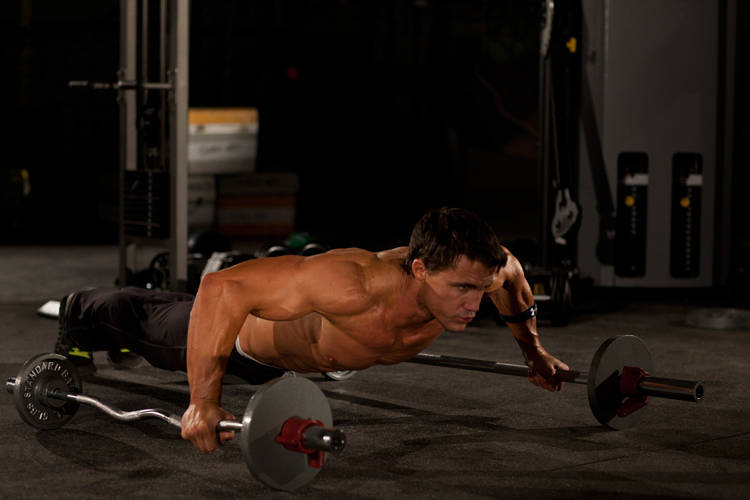
Ending position
Muscles Worked
The chest handles the primary load during this movement. The abdominals and shoulders and triceps assist as stabilizers throughout the range of motion.
How to Bodyweight Flyes
- 1
Position two equally loaded EZ bars on the ground next to each other. Ensure they are able to roll.
- 2
Assume a push-up position over the bars, supporting your weight on your toes and hands with your arms extended and body straight.
- 3
Place your hands on the bars. This will be your starting position.
- 4
Using a slow and controlled motion, move your hands away from the midline of your body, rolling the bars apart. Inhale during this portion of the motion.
- 5
After moving the bars as far apart as you can, return to the starting position by pulling them back together. Exhale as you perform this movement.
Common Mistakes
- • Focus on the mind-muscle connection — feel the target muscle working through each rep.
- • Use a controlled tempo of 2 seconds up, 2 seconds down to eliminate momentum.
- • Avoid locking out aggressively at the top — stop just short of full extension to keep tension on the muscle.
Similar Exercises
Frequently Asked Questions
What muscles does the Bodyweight Flyes work?
The Bodyweight Flyes primarily works the Chest. Secondary muscles include the Abdominals, Shoulders, Triceps, which assist during the movement.
Is the Bodyweight Flyes good for beginners?
The Bodyweight Flyes is rated intermediate. Beginners should build foundational strength with simpler movements first, then progress to this exercise once comfortable with the movement pattern.
What equipment do I need for the Bodyweight Flyes?
You need e-z curl bar to perform the Bodyweight Flyes. Most commercial gyms will have this available.
Track Your Progress
RepStack logs every set, calculates your e1RM, and coaches progressive overload — automatically.