Alternating Hang Clean
The Alternating Hang Clean is a intermediate compound movement that activates 7 muscle groups simultaneously. It primarily targets the Hamstrings, making it one of the more efficient exercises in RepStack's 873-exercise database.
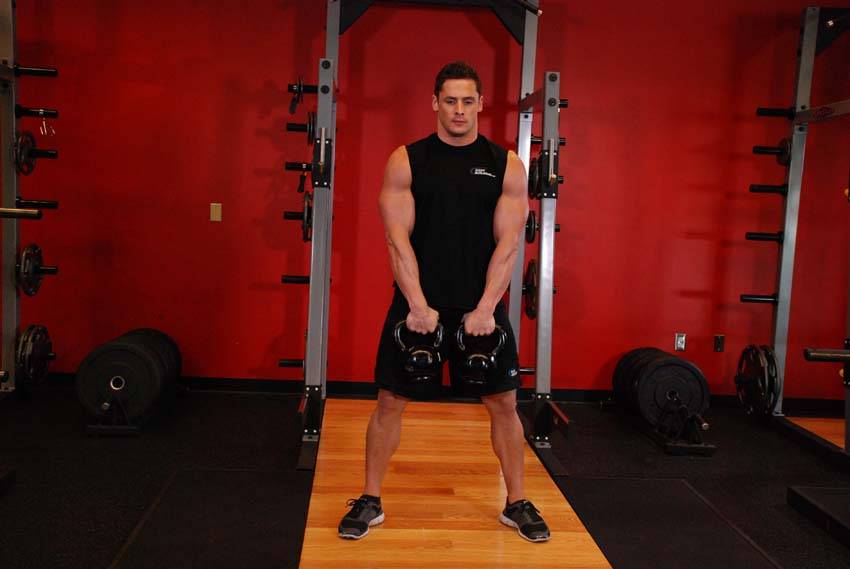
Starting position
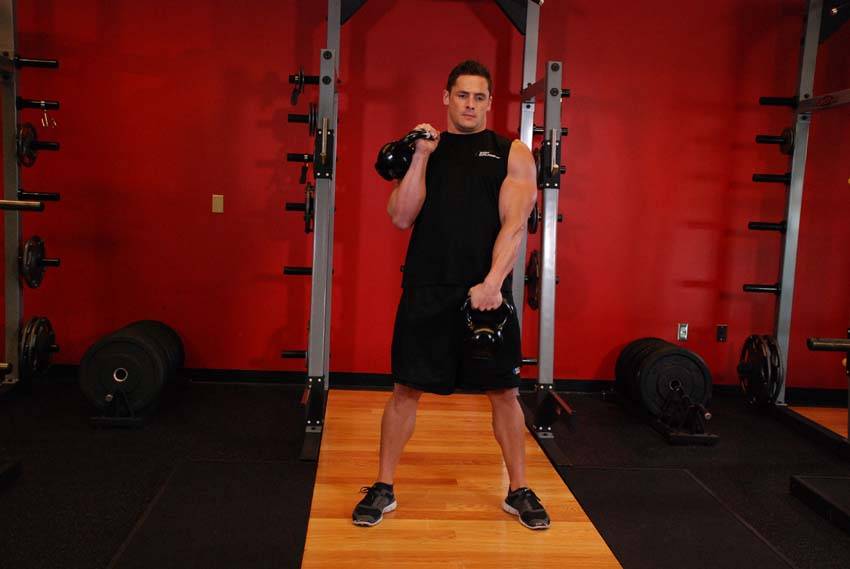
Ending position
Muscles Worked
The hamstrings handles the primary load during this movement. The biceps and calves and forearms and glutes and lower back and traps assist as stabilizers throughout the range of motion.
How to Alternating Hang Clean
- 1
Place two kettlebells between your feet. To get in the starting position, push your butt back and look straight ahead.
- 2
Clean one kettlebell to your shoulder and hold on to the other kettlebell in a hanging position. Clean the kettlebell to your shoulder by extending through the legs and hips as you pull the kettlebell towards your shoulders. Rotate your wrist as you do so.
- 3
Lower the cleaned kettlebell to a hanging position and clean the alternate kettlebell. Repeat.
Common Mistakes
- • Brace your core before initiating the movement — maintain tension throughout the entire range of motion.
- • Control the eccentric (lowering) phase for at least 2 seconds to maximize muscle fiber recruitment.
- • Squeeze at peak contraction for a full second — this is where most of the growth stimulus occurs.
Similar Exercises
Frequently Asked Questions
What muscles does the Alternating Hang Clean work?
The Alternating Hang Clean primarily works the Hamstrings. Secondary muscles include the Biceps, Calves, Forearms, Glutes, Lower Back, Traps, which assist during the movement.
Is the Alternating Hang Clean good for beginners?
The Alternating Hang Clean is rated intermediate. Beginners should build foundational strength with simpler movements first, then progress to this exercise once comfortable with the movement pattern.
What equipment do I need for the Alternating Hang Clean?
You need kettlebells to perform the Alternating Hang Clean. Most commercial gyms will have this available.
Track Your Progress
RepStack logs every set, calculates your e1RM, and coaches progressive overload — automatically.